Why Should You Make Good Coffee
People who do not drink coffee should not be in charge of making coffee.
This was a lesson I learned when I first started to drink coffee as a teenager and realized the person making our church’s coffee didn’t have a clue what he was doing. As a typical teenager, I thought the stuff served in the short, 8 oz Styrofoam cups was nothing but disgusting--it tasted like moldy dirt. That is not an unusual adolescent opinion, but it was one that lasted far too long and on premises that were faulty. The fact is, the individual making the coffee had about as much knowledge as I did. Failing to comprehend what coffee was meant to be not only caused the individual to “guestimate” the portion of bucket grounds he was using in each pot (it was inordinately too much). Simultaneously, he thought he could save the church money by double brewing the same grounds for a second pot. The result was a coffee that not only tasted like a burnt cigarette but was alternatingly either thick and sludgy or watery and weak.

It is a bit of a trope that many coffee serving churches and organizations operate their coffee programs with this same lack of attention to detail and quality. But so do many people. People live a life drinking bad coffee because they have never really known that there is anything beyond what they have tasted. Though I begrudgingly admit that some people just don’t and will never like coffee, I have frequently found that what many people object to is a certain version of coffee--typically the kind that is burnt, stale, and sludgy.
Imagine if you are a self-described “apple person” (not the computer brand). You love apples. You eat one every day, not just in hopes that it will keep the doctor away, but because you really just enjoy the taste of apples. But imagine I come to you and offer you a Fuji apple. And then a Pink Lady apple. And then I pull out a Honeycrisp or a Granny Smith. You look at me, perplexed. You have no conception of what is in front of you. "I just want an apple," you respond. “I’ve never heard of any of those." You never knew until now that apples could be green or small and come in varieties, that they could taste different (even radically so) from one another. The only apples you had ever been exposed to were red, polished, medium sized apples just placed into a bag of other similar looking apples with a label on the outside which simply read “Apples.” You love apples (like coffee people love coffee), but you are perplexed that there exists such variety.
For many people, “Coffee is coffee,” in the same way that “Apples are apples." There is no distinction between regions, varieties, and roast profiles. Colombian and Nicaraguan are as irrelevant as Washed and Natural.
If you were the apple person in my story, I would likely encourage you to try some different apples from around the world. I would tell you that you’ve been missing out. Those bland, mass produced, consumer-ready, homogenized apples may be what you are used to and you sure may enjoy them. They may even be your conditioned preference, and you will immediately recoil at the sour Granny Smith apple sinking into your teeth. And, yet, by avoiding the opportunity to broaden your understanding of what something can be, you ultimately do yourself a disservice by limiting yourself to a reduced experience.
I am not Johnny Appleseed and my job is not to convince you to try new apple varieties. Besides, you can extrapolate my analogy to just about any consumable and any experience in life. At the end of the day, one of the reasons to pursue making a good cup is simply due to experiencing the breadth of what life allows us to partake in. In this sense, making good coffee is about making new experiences and truly expanding the palette of the things we enjoy in this one life to live.
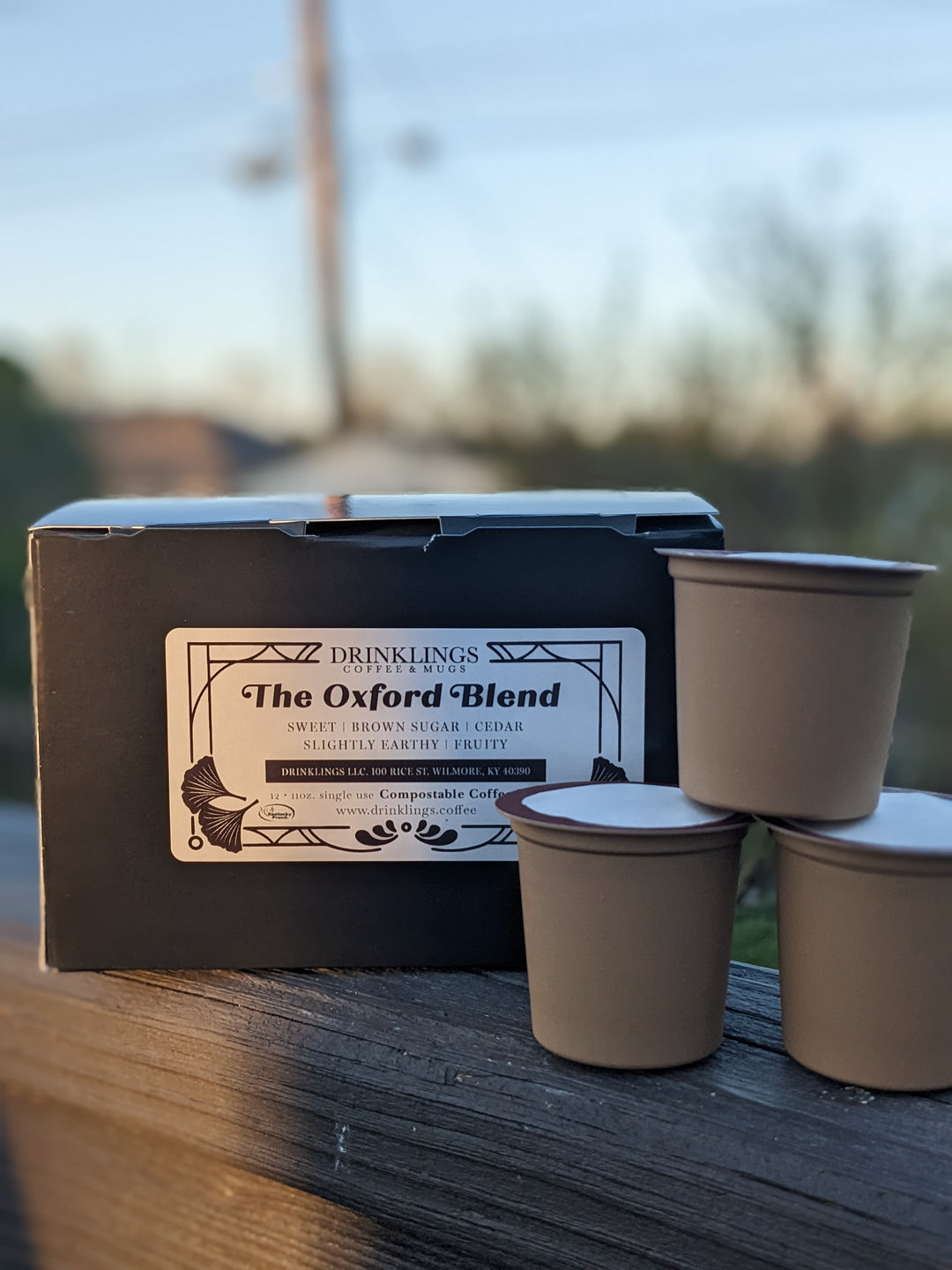
Make Sure to Order a Bag of Drinklings' Famous Oxford Blend and Start Making Good Coffee Today!