Going from Third Spaces to Fourth Spaces
Third Spaces have been part of human existence for thousands of years but over the past four decades, the concept has been a part of Western society’s social and cultural climate. Third Spaces are valuable to almost any organized community—they offer a sort of “in between” that allows respite, neutrality, and connection. But in a culture that is post-Covid, social media addicted, AI driven, and politically and globally divisive, it has become clear that Third Spaces have significant limitations and contradictions and ultimately prove themselves insufficient to provide the space necessary for healing. This presents us with an opportunity to think deeper: what are Third Spaces and is there a need for something more?
The Origins and Definition of Third Space
The ‘Third Space’ has been a popular social concept since 1989 when sociologist Ray Oldenburg coined the phrase in his book The Great Good Place. Conventionally, Third Spaces are known for being a place that is defined neither by home nor by office. The Third Space is a space unto its own, defined not by economics (business) or discipline and responsibility (home), but by community and leisure.
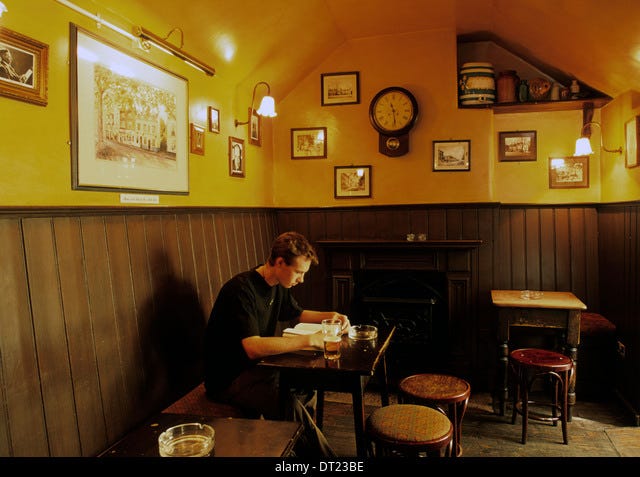
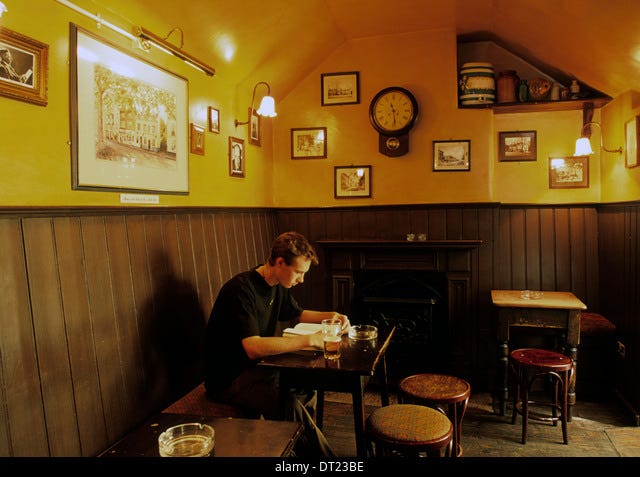
Probably both the most quintessential and ironically named Third Space is the coffee shop, which for hundreds of years seemed to embody the very concept of Third Space within its nature. Indeed, the Western European advent of the coffee house—beginning in Venice in 1645—treated coffee houses (often, at least) as classless convention halls for of intellectual life, spiritual revival, and social revolution. It would not be an overstatement to say that the Enlightenment and Western world as we know it emerged directly and indirectly from Third Spaces.
Importantly, Oldenburg’s definition of Third Space was descriptive—not prescriptive. He did not invent the concept of a Third Space, only the language used to demarcate its function from other social spaces. For Oldenburg, a Third Space was defined by the eight elements: Neutrality; Equality; Conversation; Community; a sense of “Home away from Home”; High Accessibility (i.e. easy to get to); Aesthetic Modesty; a Playful Mood.
In 2017, my wife and I visited the Southern part of Ireland, driving along the coast of Dublin all the way down to Cork and across the way to Kenmare in Co. Kerry. There, about 15 minutes from our Airbnb, we stumbled on a little fishing village with a number of houses and a few shops, all dimmed and shuttered by the post-5:00 hour. We didn’t see a soul. Just small fishing boats rocking along the water’s edge and signs that this little village had once been a site of a vibrant shipping economy.
As we walked, scoping out the quiet little village, we realized we needed to eat before we arrived at our final destination. We had not seen a restaurant for many miles, but on the opposite side of the main waterfront dock sat a building with the name “Helen’s Bar.” Like the other buildings, its doors were closed and the lights dimmed. We assumed—at best—it was a lunch establishment, from which everyone at this time of day everyone had abandoned. But to our surprise, when we opened the thick wooden barn door, the Celtic music blasted along a cool, fresh breeze and the sound of drunken laughter and a sense of community wafted over our heads as did the intoxicating smell of the fish and chips we were looking for.
We had found an Irish Third Space. A little home away from home for those in that part of the island.
The Problems with Third Space
Oldenburg’s concept of the Third Space is fairly thorough and easily identifiable when one finds the quintessential. If one were to be given his definition of a Third space and then walk into a place like Helen’s Bar or a cozy corner coffee shop, it is usually quite obvious whether it is a “Third Space” or just pit stop. After all, Oldenburg was describing spaces that were already in existence.
But from my perspective, there are three problems with Oldenburg’s model that need to be contended with in our current world and which, I think, require us to think about something bigger—something more. Something beyond Third Space thinking and goal setting.
First, there is a question as to whether a Third Space must possess all of Oldenburg’s characteristics or, if not, how many of them are necessary to qualify. While a local coffee shop or pub may strike all of the categories of the famous sociological definition, some places that Oldenburg defined as Third Spaces—libraries, malls, parks, and even the internet— can lack some of Oldenburg’s core features. For example, while the internet knows no status prohibition, and it is certainly the most accessible of any location on earth, it is hard-pressed to be a place—even with all its “friends” and “likes”—of sustained laughter and belonging. Indeed, more often than not it perpetuates isolation, depression, and division both within its spaces and in the real world. Indeed, it could be argued that “social media” (the internet’s best attempt at the communal aspects of Third Space) is the very antithesis of a Third Space.
Similarly, while libraries are often supremely accessible, free of economic discrimination, and do not prohibit upon class, they are not typically places of conversation, community, and laughter. Even coffee shops, which are often portrayed as the quintessential Third Space, may be seen as economically discriminatory when artisanal beans or Third Wave coffee is priced higher than commodity alternatives (why that is and should be the case is another story).
Second, given the problem of admission criteria, there is an equal and opposite question: how does one know when a Third Space stops being a Third Space? Is a coffee shop (no names) that exists as part of a competitive global chain, prefers store and product uniformity, and relies heavily on profit-oriented efficiency models and tools still considered a Third Space, even if it was originally developed and marketed along those lines? What if it mutually attracts the casual conversationalist looking to step aside from his business responsibilities and the businessman choosing to use the space primarily for business purposes? What if the goal of the space is not community but corporate success?
Or, what if a bar ceases to be a place of drunken laughter and joviality and becomes a place of drunken misery and despair? What if such laughter is actually pain induced, escapist in orientation, and perpetuates a substance reliance problem that breaks the very spaces of work and family? In other words, does a Third Space that looks from the outside like a place of respite and joy become transformed as something more harmful if one can see behind the rationalities that drive its adherents to its doors in the first place?
Third, and most importantly, what if the social environment that defines a Third Space drastically changes? What if the world changes in such a way that the normal joviality, community, comfortability, convenience, conversation, and even economic accessibility begin to disappear? What if the conditions of the outside world can no longer be held in the bays of first and second spaces, but begin to take over the Third Spaces that are meant to be harbingers of protection?
This third example is not hard to imagine. After all, for many Third Spaces, the 2020 pandemic challenged both the integrity and function of such spaces. It raised the question in the end, what even is a space when it cannot be filled? And a related question, when Third Spaces are eliminated, are we left with only the first or the second?
When Spaces Aren’t Spaces
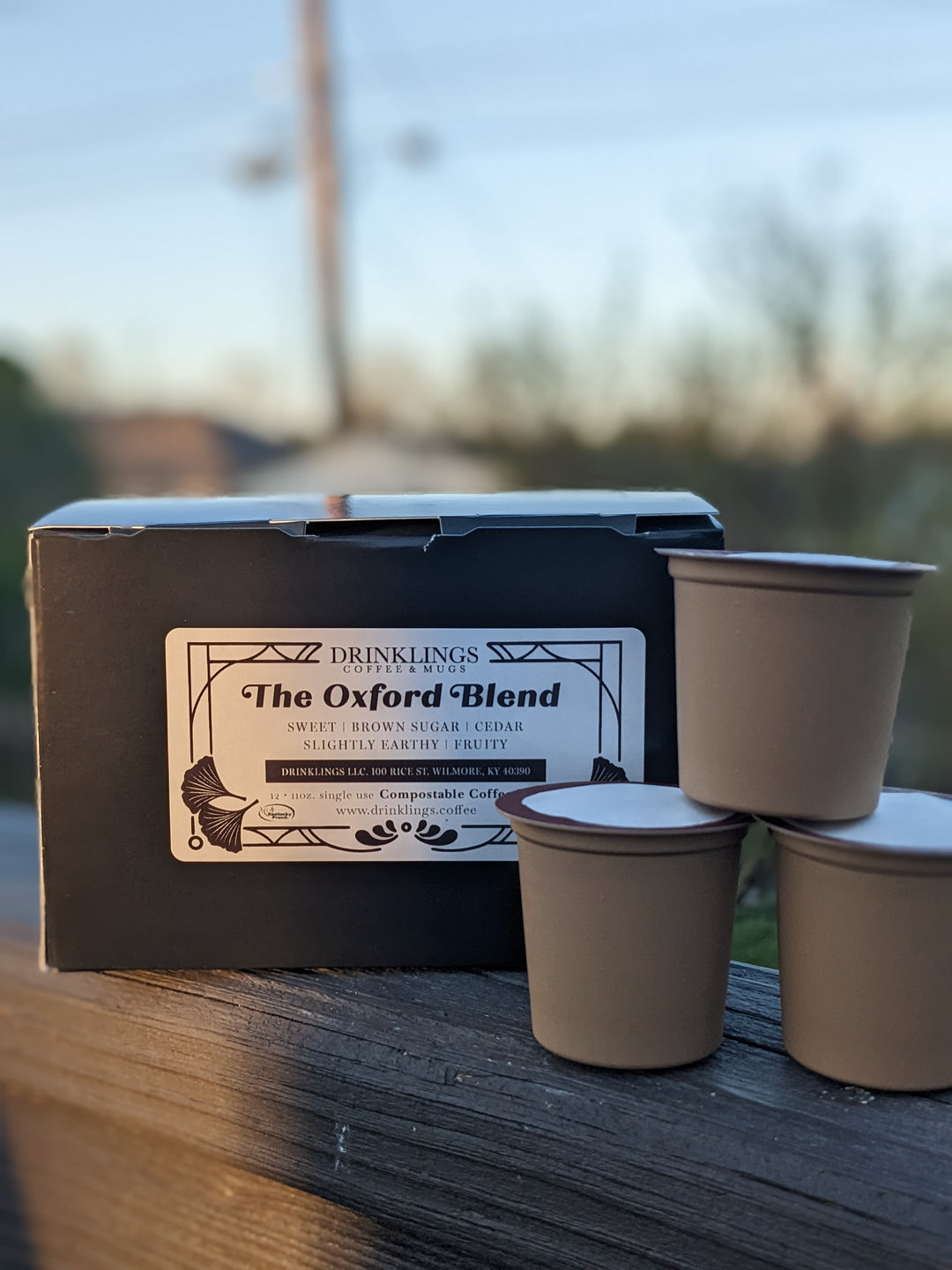
When Covid-19 hit our little coffee shop located south of Lexington, Kentucky, we were faced with the challenge of definition. We asked the question, “What even are we now that our space was the essential equivalent of thousand square foot paperweight?” Without people, we still had a space by all technical terms. It had its tables, its walls, its decor. The square footage could theoretically hold a small crowd. Our minimalist design was still technically attractional and aesthetically pleasing. But it was only a space with contingent possibility, not actuality. In many ways, it resembled a waiting hall, except it was perpetually waiting. For months, we continued to adjust and pivot what we were doing to still run our business without fully considering what that space had to do with our business. But Covid actually taught us something surprising: we weren’t actually in the coffee business. We were in the business of creating space.
We might look at this time period and lesson in the opposite direction. While certain organizations that emphasized community, fellowship, and belonging struggled to keep doors from being shuttered during the pandemic, other organizations based on efficiency, individuality, and anxiety thrived! Our business technically survived Covid, but only through transformation. And that transformation was realizing that not only did we want to be a genuine Third Space, but due to the insufficiencies of that model as well as the lessons that we learned during Covid, we needed to be a Fourth Space organization as well.
The Fourth Space is a concept developed not out of a desire to replace the Third Space but to answer some of the challenges and fill in some of the areas in which sociological description are insufficient.
The Fourth Space
The Fourth Space emerges directly out of observations on the flip side of Covid. Whereas the concept of Third Space was demographically oriented and aimed to be objective—i.e. the observation of conversation or the various metrics of neutrality—the concept of a Fourth Space is experiential and therefore subjective. A Fourth Space is not reduced to empirical criteria; instead, its basis is purely in the epistemology of experience and imagination, two things which reductionism dismisses as meaningless, and yet seem to be the very things that we most need.
-
A Fourth Space is one in which fellowship can flourish. While community is a demographic detail (i.e. citizenship, racial, gender, religion, political bent, etc.), fellowship is always relational. Someone can technically be in community and yet be alone. Someone cannot be in fellowship and be alone. Fellowship is primarily a sense of “being known”, or having a relationship that is “I/Thou” between one individual and another, a transcendent being, an author’s voice, or even the self. Community places can allow for masking. Fellowship, by necessity, dissolves them.
-
A Fourth Space is one in which time and other structures are experientially relative. Phrases like, “Where did the time go?” or “I feel like we’ve been talking forever” are often associated with fourth spaces, as is a sense that you are able to tune out other distracting components of external and internal environments. Things become “narrow”, in a sense, and either the person or the activity you are absorbed into become the only solid things experientially. (P.S. More on this one below).
-
A Fourth Space aims to be “soul”-ish. That is, it aims to bring joy, meaning, and belonging to the inner self. In a sense, it allows ones being to be present and mindful, allowing a sense of transcendence to descend onto the person or persons involved. This is one reason why a Fourth Space does not necessarily require other people to be present. C.S. Lewis and J.R.R. Tolkien’s Inklings group believed that the purpose of a story was to break into the soul and provide meaning about oneself and life.
-
A Fourth Space helps cultivate the imagination, not inspiration. Inspiration can be manufactured or assembled or even stimulated through various means and mechanisms. As often as not, inspiration is discordant with reality and sometimes even nefarious in intent. But imagination is a desire to translate the Reality and truth through contemplation. Malcolm Guite speaks of imagination as a sort of “epistemology”, to see what is real and true, not just motivating. In imagination, one discovers the ability to see things as they truly are.
-
A Fourth Spaces enhances humanity. Whereas Third Spaces do the necessary work of establishing equal social status, fourth spaces speak to human potential. The Fourth Space aims to wake humans up to their maximum potential, by both describing and ascribing a fuller sense of humanness than the reductive limitations of demographics. In a sense, it propositions that equality is not enough. It does not allow for human narcissism, but it does not lessen the dualities of potential and responsibility inherent to human beings (i.e. one may walk away with a certain sense of boldness and power that in non-fourth spaces are absent).
-
A Fourth Space is healing and restorative. Like Third Spaces, Fourth Spaces can serve as places of respite. They do not merely stand between the hardships and challenges of work and home; they allow one to enter into the hardships with equanimity and purpose.
-
A Fourth Space may or may not be hard to get to—but it is always considered worth the journey. Whereas Third Spaces are geographically limited, Fourth Spaces can be difficult and arduous to get to. Sometimes the Fourth Space is a quick descent. Other times it is an Odyssey. The Dzogchen Beara monastery sits along the wild cliffs of the Beara Peninsula at the furthers Southwest coast in Ireland—hardly an easy to get to location. By technicality, it not a Third Space. But it is known as a place where many find deep reset and healing. The Fourth Space exists in sometimes the most rural parts of human existence.
-
Importantly, a Fourth Space is not strictly (or even primarily) physical—in fact, Fourth Spaces are primarily experiential and emotional. The “space” is not measurable (i.e. square footage of a location), but experiential and dependent upon how one enters into whatever physical space one finds oneself in. Nevertheless, the conditions of a physical space often enhance or reduce the ability to experience a Fourth Space. A therapist’s office, spiritual gathering, or a coffee shop may in fact be used to promote fourth spaces just as much as they can be used to hinder it. When Third Space organizations pay attention to how they portray themselves, what they choose to do, how they design their physical structures, how they speak to patrons, what they stand for, what they offer, and how they carry about their business they either promote or fail to promote The Fourth Space.
Ultimately, the concept of Fourth Space is one that cannot be sociologically described, but it nevertheless can exist and it can be promoted in the right conditions or with the right orientation of the individual. It is not dependent upon Third Spaces. Indeed, it can even function when Third Spaces break down. Nature, books, spirituality, and even family and work (yes, even those two other spaces) provided meaningful space and connection in a time when Oldenburg’s concepts became harder to sociologically sustain.
Fourth Spaces and the Time Dimension
There is an ironic but important relation that Forth Spaces are connected with time, which in 1908 was described as the Fourth Dimension. Time has a certain measurement, but it stands distinct from the three other dimensions (height, width, and length) in that it cannot be observed in the same way and is famously relative to whatever physical space it is connected to (i.e. time moves slower with objects with higher gravity).
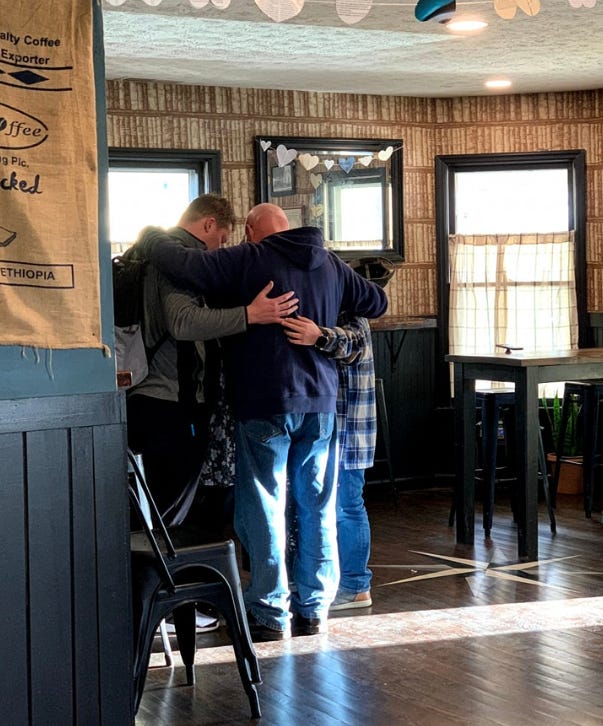
The same is true with Fourth Spaces in life. They are relative to spaces that encourage “more gravity.” They allow time to move at variable speeds. They encourage possibility, they encourage fellowship, imagination, and human redemption. They are not confined to physical spaces. Indeed, the Fourth Space can be brought into any space—including work or home—but they are most cultivated in physical spaces that aim to specifically cultivate them, spaces specifically reserved for such Fourth Spaces to actually exist.
When the acute situation of Covid-19 wrapped up and individuals were allowed to convene again it was clear that what people were looking for was not “Third Spaces” per se—those were, in fact, still a bit circumspect and individuals approached them with caution. What people were looking for were places in which meaning could be found, where friendships could be bonded, where partners could talk for hours, where individuals could get lost in a book or connect deeper with God or themselves, where wounds could heal—including the wound of isolation and collective trauma.
Physical spaces, thus, can make this possible. They cannot be described by sociological metrics. They cannot be built along the lines of Oldenburg’s theory and, in fact, some Fourth Spaces defy certain elements of Oldenburg’s description. But they can, in fact, cultivate the particular space that all of us deeply need.
Third Spaces are important. They provide society with a great deal of good, a great deal of connection, and a great deal of rest. But Fourth spaces are necessary. They can be accessed anywhere, they aim to go deeper than sociological description, and they provide individuals with something greater than rest—they provide individuals with meaning.